
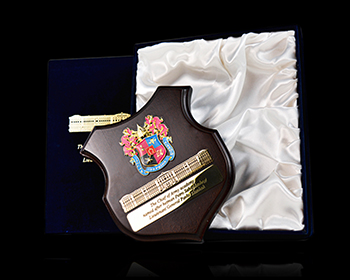
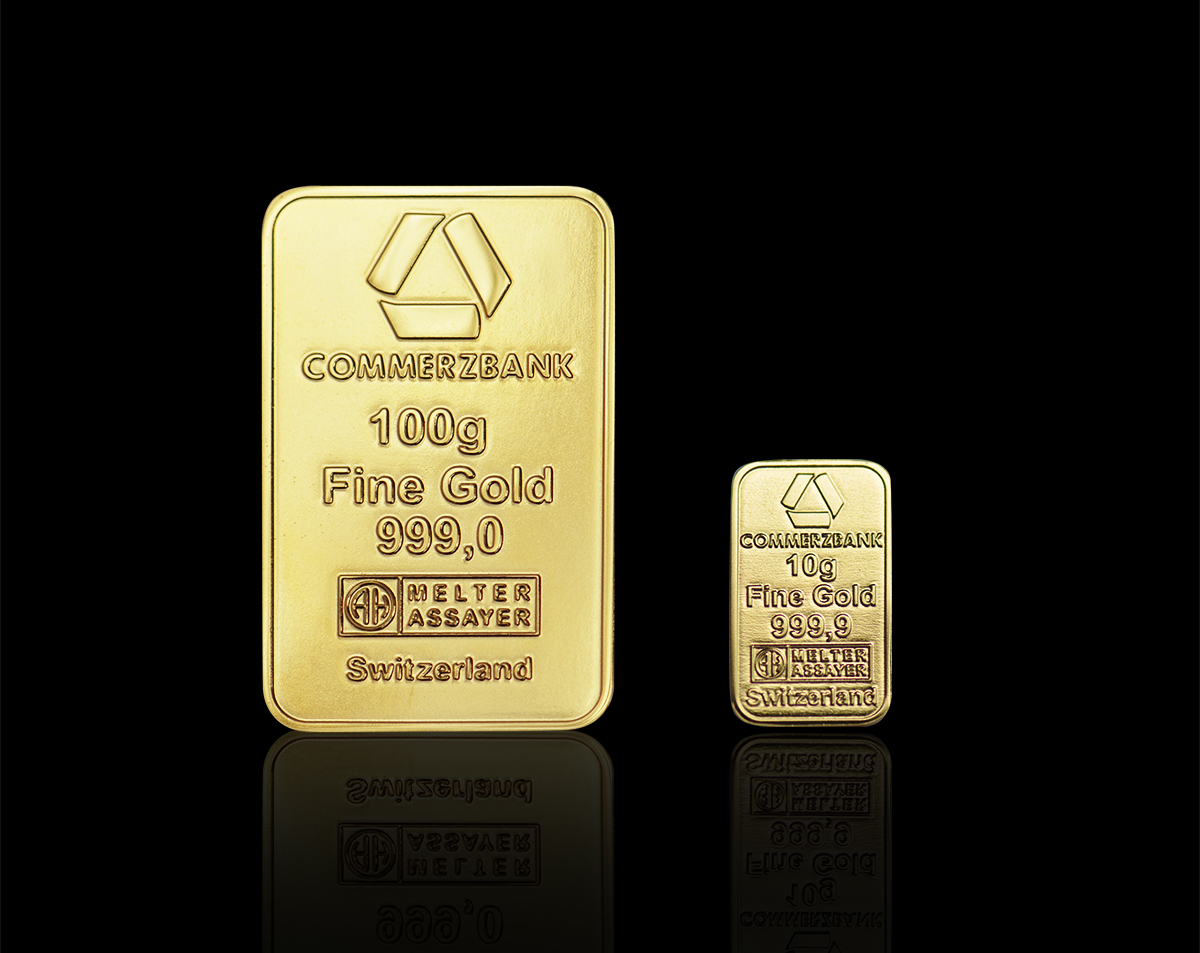
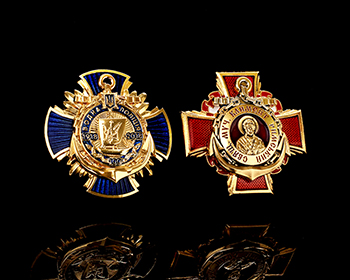
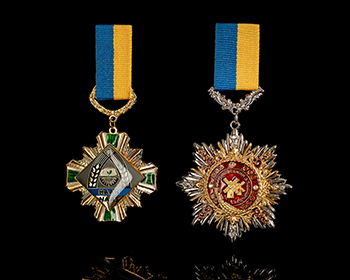
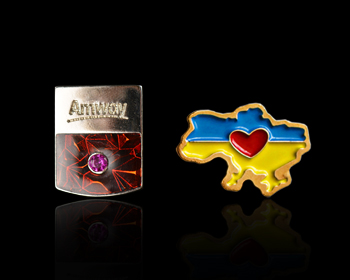
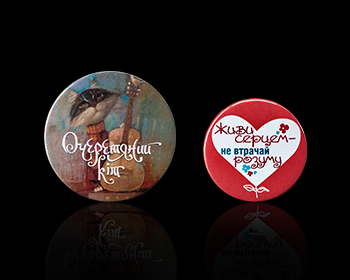
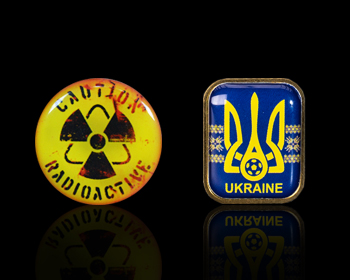
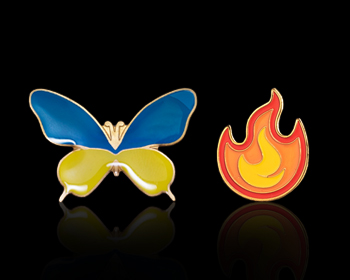
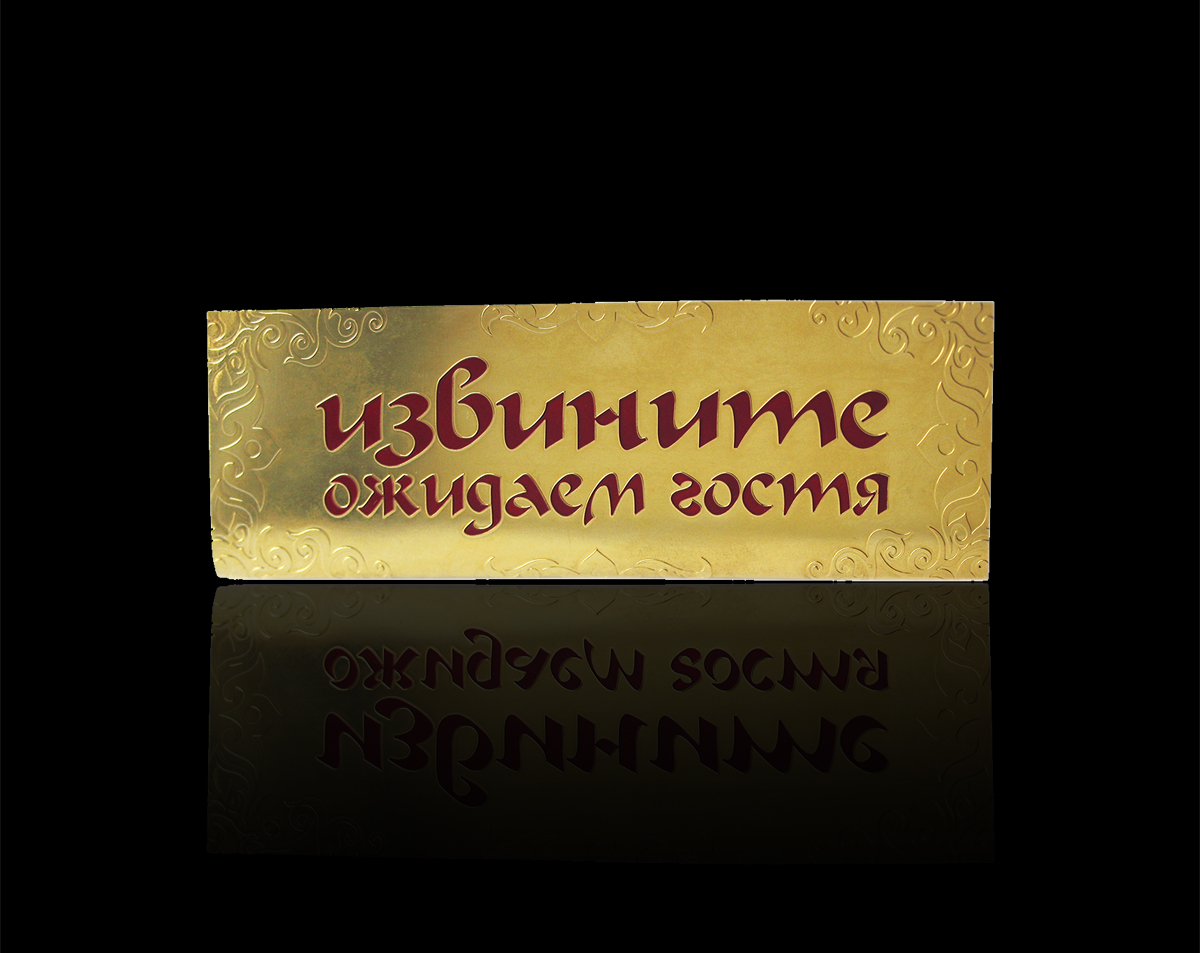
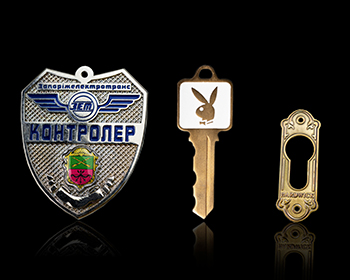
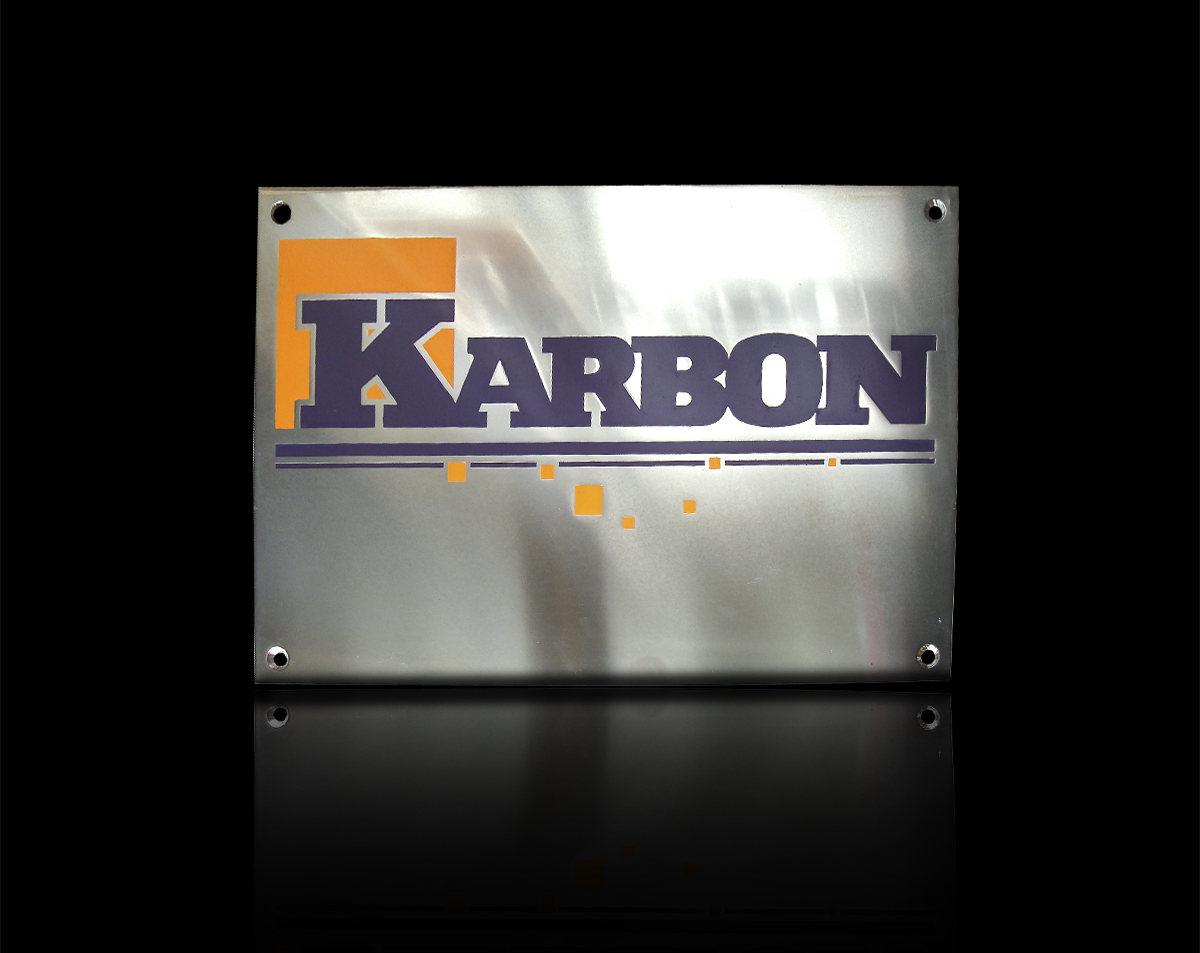
Manufacturing award and souvenir products
High-tech manufacturing for modern awards, insignia, and branded products
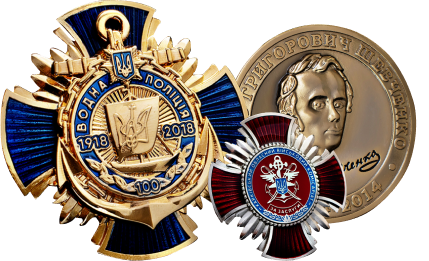
Manufacturing award and souvenir products
High-tech manufacturing for modern awards, insignia, and branded products
Technologies
-

Laser engraving on metal, glass, and wood
-
CNC milling of metal, plastic, wood, and plywood
-
Electroplating in gold, titanium, nickel, brass, and more
-
Turning for wood and metal parts
-
Brass etching
-
Bronze and brass casting
-
UV printing on glass, metal, wood, and acrylic
-
Finishing and painting for wood, plywood, and MDF
-
Laser cutting of acrylic, plywood, and steel
-
CNC engraving for aluminum, brass, and acrylic


Laser engraving on metal, glass, and wood
Laser engraving removes the top layer of material with a focused beam, creating a precise relief image. By adjusting laser power and using multiple passes, we can control engraving depth and achieve a stronger visual contrast.
-
Absolute precision
CNC-controlled equipment ensures exact image reproduction, stable quality, and minimal defects.
-
Speed
Compared with manual finishing, laser engraving is fast and efficient, which makes it ideal for medium and large production runs.
-
Versatility
Laser engraving can be applied even to hard-to-reach areas of award and souvenir products.


CNC milling of metal, plastic, wood, and plywood
CNC milling is a mechanical process that shapes flat surfaces and complex parts with rotating cutters. Our software-driven milling equipment supports horizontal, vertical, and angled machining while maintaining high precision and consistent throughput.
-
Suitable for a wide range of materials including wood, plastic, acrylic, and metal.
-
Provides the fine precision required for detailed awards and souvenir products.
-
Modern digital workflows keep production accurate, repeatable, and efficient.
Electroplating in gold, titanium, nickel, brass, and more
Electroplating applies a thin layer of gold, silver, or other metals to the surface of a medal or insignia. Depending on the required finish, the coating thickness can range from microns to fractions of a millimetre. Before plating, each item is polished, degreased, and fully cleaned to ensure a stable, high-quality finish.
-
Electroplated finishes are highly wear-resistant and retain their appearance and protective properties over time.
-
Electroplated gilding helps protect medals and insignia from oxidation and corrosion.
-
This process allows us to control coating thickness precisely and tailor the finish to the needs of each individual product.
Turning for wood and metal parts
Turning is a machining process in which the workpiece rotates while the cutting tool moves across it. It includes operations such as turning, trimming, and boring, and is essential for producing award components where other manufacturing methods are technically unsuitable.
-
Our production facility is equipped with the turning machinery required for award and souvenir products of varying complexity.
-
Our experienced specialists machine metal, wood, and other materials with precision.
-
Precision turning makes it possible to manufacture complex custom elements and distinctive award designs.
Brass etching
Etching removes a controlled layer of metal using chemical processes. We use electrochemical, chemical, acid, alkaline, and ion-plasma techniques, selecting the right method for the material and the design task. Decorative etching makes it possible to create detailed graphics and inscriptions on medals, orders, and souvenir items.
-
We use the full range of equipment required for high-quality metal etching.
-
Etching allows us to control depth and remove multiple layers where needed.
-
To prevent further oxidation, etched areas can be protected with enamel or metal finishing such as gilding.
Bronze and brass casting
Casting is one of the oldest metalworking methods, with a history of more than 12,000 years. Copper-based alloys offer excellent visual qualities once formed. The process includes sketch development, mould creation in plaster or polymer material, and pouring molten metal into the mould.
-
Casting makes it possible to achieve crisp detailing on medals together with rich tones of non-ferrous metals.
-
Prepared moulds can be reused for repeat batches and larger production runs.
-
Solid casting also allows for additional finishing with precious metals, enamels, lacquers, and other decorative techniques.
UV printing on glass, wood, and acrylic
UV printing uses inks that cure under ultraviolet light. It is indispensable for souvenir production thanks to its durability, resistance to sunlight, and ability to produce sharp, vibrant images.
-
UV printing can be applied to almost any surface, including wood, metal, acrylic, and glass.
-
The inks we use are environmentally responsible and safe in everyday use.
-
Software-driven printing also makes it possible to place text and graphics on very small details of medals and souvenir items.
Finishing and painting for wood, plywood, and MDF
Working with wood requires careful preparation and strict control at every stage of finishing. Because wood is porous and reacts to environmental changes, all surfaces are processed according to a precise workflow that includes sanding, priming, enamel application, and protective lacquers.
-
Souvenir products with painted wooden elements retain their colour and depth for years without noticeable fading.
-
High-quality materials ensure strong paint adhesion, so finished parts stand up well to physical wear, especially in items such as pins and keyrings.
-
All materials undergo strict environmental control and are safe, stable, and free from toxic emissions.
Laser cutting of metal, acrylic, and plywood
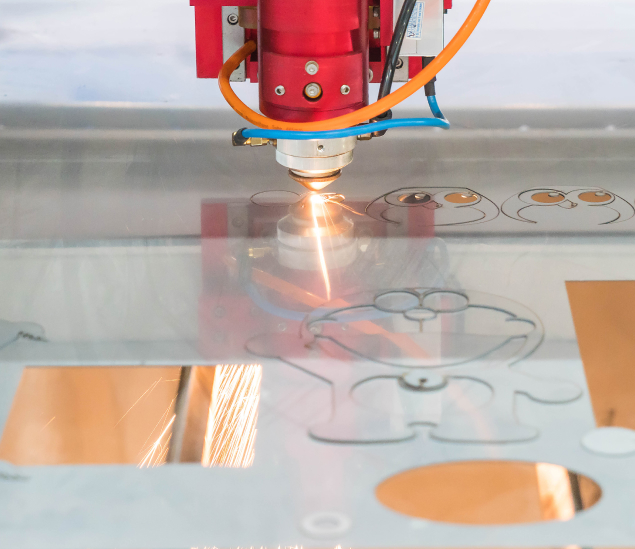
Industrial laser cutting uses a focused high-power beam controlled by software. It produces very narrow cuts with minimal heat impact and delivers the precision required for industrial volumes and large production runs.
-
Laser cutting minimises material deformation, even on softer materials such as plywood or acrylic.
-
The software allows us to cut complex contours in both flat and volumetric parts used in award and souvenir production.
-
Laser processing delivers a cut quality that is difficult to achieve with other fabrication methods.
CNC engraving
CNC engraving removes the top layer of material with special cutters so that text and graphics can be applied to the product. It is commonly used when laser engraving is not suitable and is especially effective for emblems, facade and office signs, logos, and seals.
-
This method works with a wide range of materials, including glass, leather, metal, and wood.
-
It allows us to create both flat and dimensional graphics and lettering on souvenir products.
-
CNC programming enables both straight and curved engraving patterns of virtually any complexity.
Would you like to know the cost of production?
Leave your contact details and our manager will get back to you within one business day